Page builders sound great on the surface. Drag and drop. Pick a template. Launch a website in a weekend. For many businesses, that promise is hard to resist.
The problem is what happens after launch. As your business grows, those “easy” tools start to show their limits — and quietly work against you.
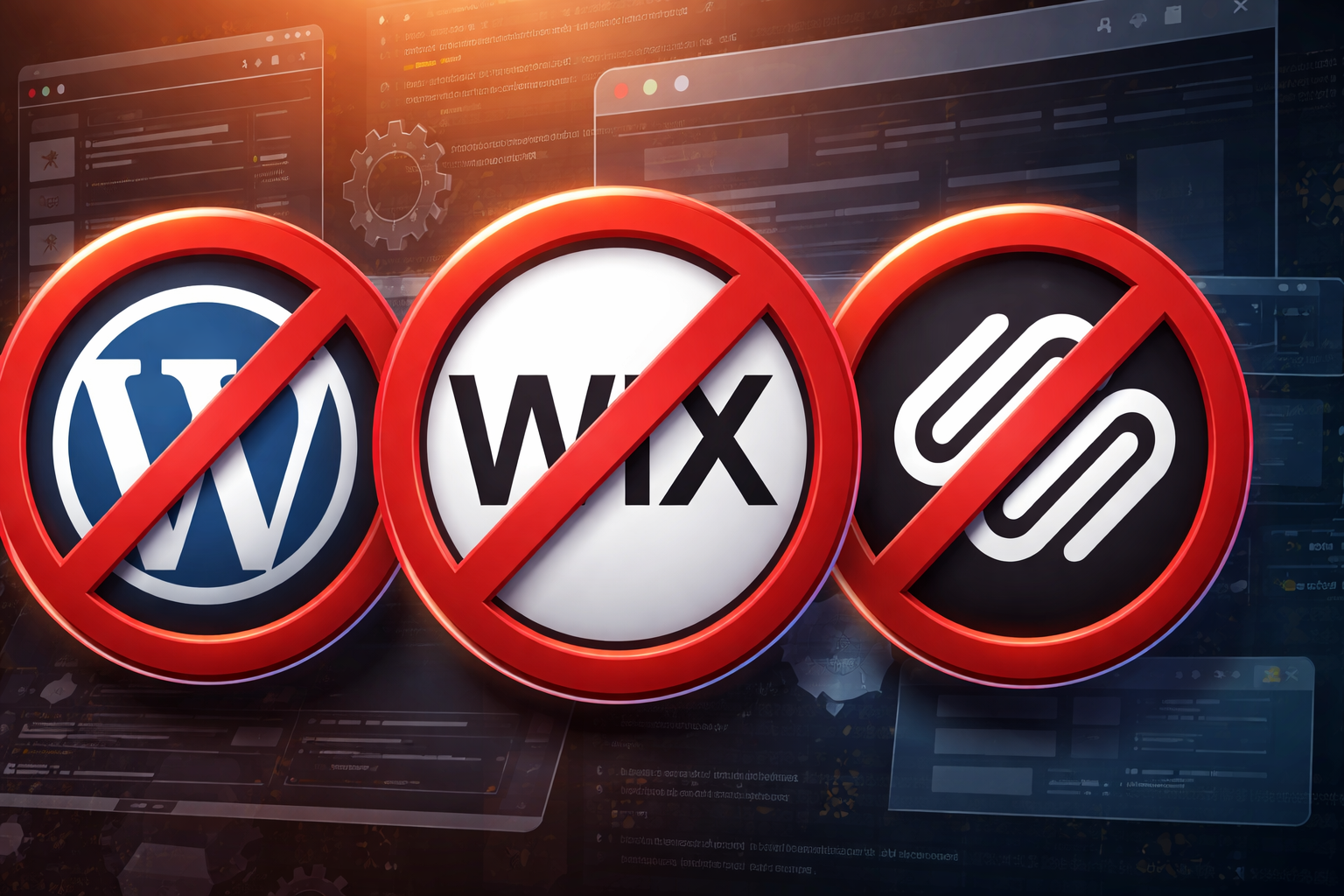
At Full Throttle Studios, a large percentage of our projects come from rebuilding sites that started on WordPress, Wix, Squarespace, or similar platforms. Not because they’re useless — but because they’re built for convenience, not long-term performance or growth.
1. Page Builders Are Slow by Design
Page builders rely on heavy themes, shared scripts, and generic layouts designed to work for everyone. That means a lot of extra code loading on every page — whether you need it or not.
The result is slower load times, especially on mobile devices.
Slow websites lead to:
- Lower Google rankings
- Higher bounce rates
- Fewer leads and conversions
Speed is no longer optional. If your site feels sluggish, visitors don’t wait — they leave.
2. Plugins Create a Fragile Website
Most page-builder sites depend on plugins for basic functionality.
Contact forms, SEO tools, security, image optimization, caching — each feature adds another plugin, often written by a different developer.
Over time, your website becomes a stack of third-party code you don’t control.
One bad update can:
- Break your layout
- Cause plugin conflicts
- Create security vulnerabilities
That’s not a solid foundation. It’s a house of cards.
3. Security Becomes an Ongoing Headache
Popular platforms are popular targets. The more plugins and themes you use, the larger your attack surface becomes.
If a plugin stops being maintained or misses a security update, your site can become vulnerable overnight — often without any obvious warning.
Most business owners don’t want to worry about updates, patches, or hacks. They just want their website to work.
4. You’re Locked Into Someone Else’s Limits
Hosted page builders are designed for average use cases.
As soon as you need something custom — a unique workflow, advanced layout, performance tuning, or deeper integration — you hit a ceiling.
These platforms control the rules. You work within them.
That’s fine early on, but it becomes frustrating fast as your business grows.
5. SEO Is Often an Afterthought
Many page builders advertise themselves as “SEO-friendly.”
What that usually means is you can edit page titles and descriptions. That’s just the bare minimum.
Real SEO depends on:
- Clean, efficient code
- Proper content structure
- Fast load times
- Control over markup and assets
Bloated sites start at a disadvantage before SEO even begins.
6. Page Builders Don’t Scale With Your Business
Most websites don’t stay small.
Five pages turn into service sections, landing pages, blogs, galleries, e-commerce, and integrations.
As complexity increases, page builders become harder to manage, slower to load, and more expensive to fix.
That’s usually when business owners say, “We should’ve built this the right way from the start.”
7. What Full Throttle Studios Does Differently
We don’t use page builders.
We build clean, custom websites using modern frameworks — with only the code your site actually needs.
That means:
- Faster load times
- Better SEO performance
- Stronger security
- Full control over design and functionality
- A site that grows with your business
Your website should be a performance tool — not a patched-together template.
The Bottom Line
Page builders are fine for hobby sites and short-term projects. But if your website is a core part of your business, shortcuts eventually cost more than they save.
If you want a fast, secure, scalable website built for real-world performance, Full Throttle Studios builds sites that work as hard as your business does.